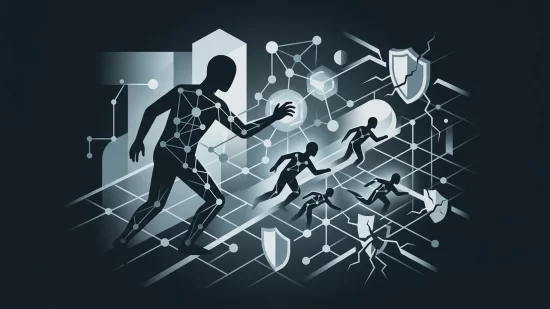
Let’s get one thing straight: you didn’t exactly vote for it, but here you are—sharing your waking hours with algorithms, bots, and semi-sentient devices that claim to know you better than your own mother. The phrase "Tech Life" is tossed around like confetti, meant to evoke progress and efficiency. But for most of us, it’s the air we breathe. Artificial intelligence, once confined to sci-fi and hushed academic conferences, now sits in your kitchen, rides in your car, and peeks into your online shopping basket. You call it convenience. The CEOs call it market dominance. What do you really get? That’s a tougher question.
From Hobby Magazines to Omnipresent Algorithms
Back in the day—a phrase no tech marketer wants you to use—PC User magazine in Australia was a geek’s holy grail. The content was about computers: how to build them, how to fix them, what obscure command line prompt would rescue your dying hard drive. By 2012, this focus was apparently too narrow for the brave new world. That’s when PC User tried to become all things to all people as TechLife, promising coverage of wearables, streaming, smart home gadgets, and—yup—AI. Fast-forward to 2022, and TechLife the standalone magazine is no more. Merged, subsumed, eaten up by APC. Just another casualty in the relentless, relentless march of technology: the experts are now replaced by anyone with a smartphone and the will to scroll.
Artificial Intelligence: Creeping Into the Corners
The AI invasion isn't a looming threat. It's already here, sitting in your living room, pinging from your pocket. Siri and Alexa are the palatable faces of it—a friendly voice to set a timer or play a song. Behind the scenes, more insidious algorithms track your habits, tweak your feeds, nudge your purchases, and learn what grabs your attention. When you binge-watch yet another true crime documentary, it’s not by accident. Streaming platforms use AI to guess not just what you want, but what’ll keep you gazing just long enough to forget you meant to do laundry.
The benefits? Sure—AI can make things faster. Healthcare diagnostics become more accurate, autonomous vehicles promise fewer accidents, and online shopping morphs into a frictionless, hypnotic experience. But if you're thinking you’re just a happy passenger, think again. You’re cargo, and the route is paved with your personal data.
Smart Devices, Dumb Risks
It started with fitness trackers and fridge thermometers. Now, you’ve got interconnected lightbulbs, web-linked security cameras, even voice-activated toilets. The Internet of Things (IoT) was supposed to make everything more efficient. What’s happened is your home’s become an unending noise of updates, firmware patches, and the looming threat that today’s "smart" will be tomorrow’s brick.
Everything is collecting data—step count, sleep patterns, when you’re home, what you eat, who you talk to. The promise: a life so tightly optimized, you’ll barely have to think. The risk: an unending stream of vulnerable endpoints just begging to be exploited. Who needs to break a window when someone can reroute your entire smart home from a laptop in St. Petersburg?
Social Media: Talk Is Cheap, Attention Pricier Still
Social media started as a way to connect, to share, to belong. Now it's a noisy marketplace where attention is currency and outrage is king. AI is at the wheel, amplifying whatever gets the most engagement, often at the expense of nuance—or truth. That reposted meme, that trending tweet, the viral video your aunt can’t stop sharing: none of it’s accidental. Algorithms have one job—keep you glued to the platform. Truth, civility, and accuracy? Nice to have, sure, but they don’t trend nearly as well as scandal.
Don’t forget the price you pay here isn’t just your time. It’s your privacy, your preferences, your location data, your "likes," all bundled up and sold to the highest bidder. Big Tech calls this “tailored experiences.” Most call it a privacy nightmare. But convenience is a powerful drug—one people can’t seem to quit.
E-commerce: The Storefront Vanishes
Online shopping now feels like magic. One tap, two days, it’s on your doorstep. Behind the slick interface, AI is busy upselling, cross-selling, gently manipulating you to spend a little more, a little more often. Recurring subscriptions, personalized recommendations, "others also bought"—every click tracked, every hesitation analyzed. Physical stores scramble to keep up, digitizing their own offerings and hoping you’ll still want to browse a real aisle now and then.
This new order rewards the connected, the tech-savvy, and—let’s not kid ourselves—the wealthy. If fast broadband and the latest gadgets aren't in your budget, too bad. You’re watching from the sidelines as the future rolls past.
The Dark Side: Security and the Digital Underclass
Every device you add, every app you install, it’s another opportunity for data to be harvested, for breaches to occur. High-profile leaks remind us—often too late—that personal information is a commodity, sometimes protected with little more than good intentions. Laws try to catch up, but tech moves faster than any regulator. It’s the digital Wild West, and you can’t count on the sheriff showing up in time.
Meanwhile, let’s talk digital divide. Silicon Valley loves to pretend everyone lives in a world of gigabit fiber and 5G signals. Not true. Huge swaths of the globe, and plenty of households in wealthy nations, still lack affordable, reliable access to these gadgets and networks. For them, "Tech Life" is just another reminder of what’s out of reach. When school, work, banking, and healthcare all go digital, being left out isn’t an inconvenience—it’s a disaster.
Where Do We Go From Here?
Now we watch the next wave build: 5G-enabled everything, a tidal surge of interconnected sensors, autonomous cars that supposedly won’t kill anyone, and smart refrigerators texting you when you’re out of oat milk. The future comes prepackaged, shiny and irresistible. But for every step forward in convenience, there’s a question—who’s minding the store? Where does your data go? How much control do you trade for that new feature or free trial?
You’re told it’s all for your benefit. Sometimes it is. Much of the time—well, check your privacy settings. If you can still find them.