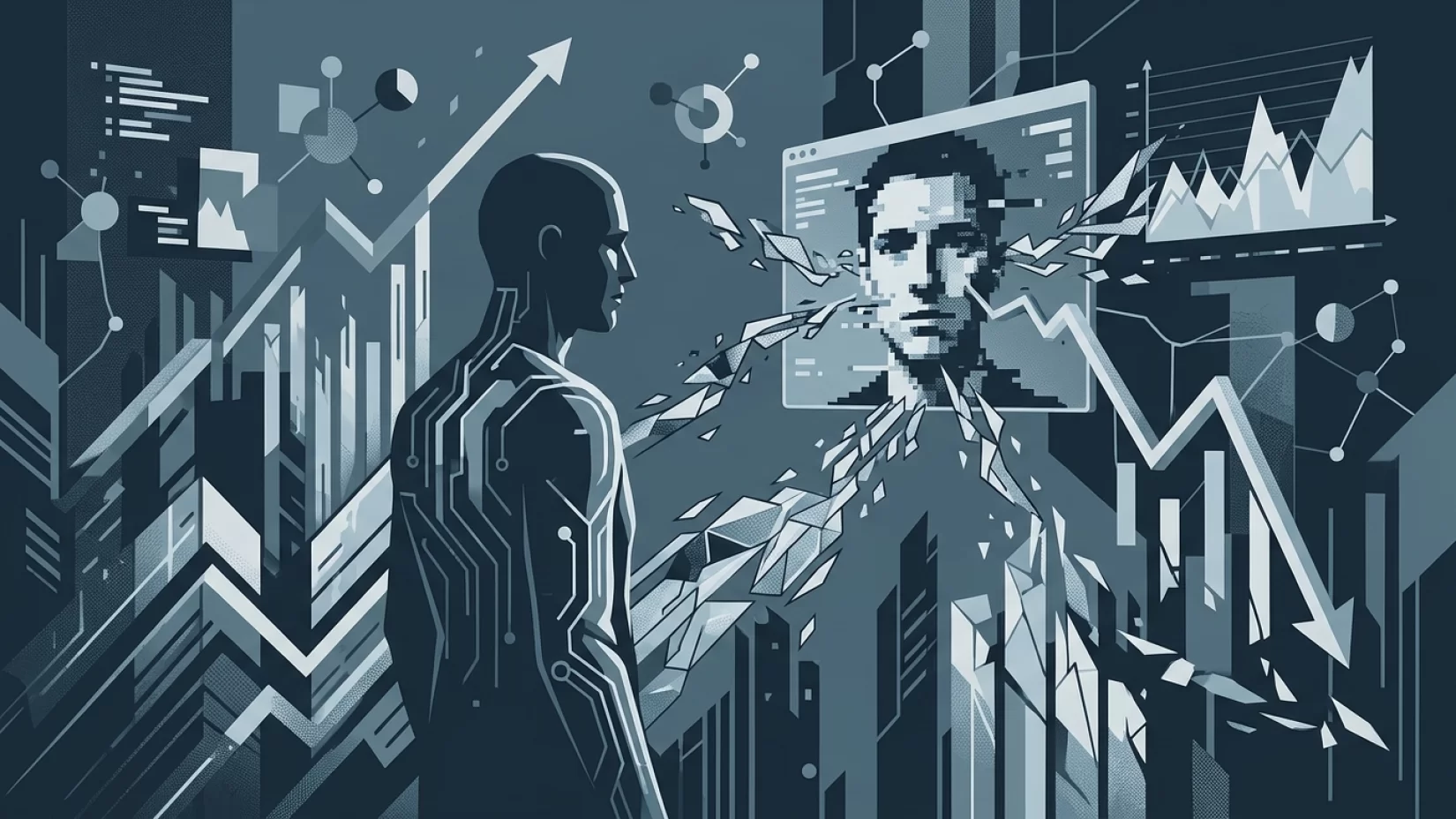
Imagine checking your phone and seeing a video of a well-known CEO — maybe Elon Musk or the head of your country’s stock exchange — making a dramatic announcement about a company’s future or recommending a hot stock. It looks real. The voice, the face, the background, even the subtle mannerisms all seem genuine. But what if none of it is true? What if that video was generated by artificial intelligence, designed to manipulate you and millions of others into making investment decisions based on a lie?
This is not a hypothetical threat. In the past year, deepfake videos of executives have been used to move stock prices, trigger market panic, and lure unsuspecting investors into scams. These AI-generated fakes are so convincing that even experienced eyes can be fooled. The financial fallout is real — and for ordinary people, the consequences can be devastating. In a world where anyone can create a fake video with a smartphone and some software, knowing how to spot and verify executive statements is no longer optional. It’s essential for protecting your money, your confidence, and your trust in the markets.
Deepfakes: More Than Just a Tech Buzzword
Let’s start with the basics. A deepfake is a video or audio recording created using artificial intelligence (AI) to mimic a real person’s appearance, voice, and movements. The technology behind deepfakes has advanced rapidly. What once took a powerful computer and technical know-how can now be done with off-the-shelf apps and a few minutes of video footage. The result? Videos that are increasingly hard to distinguish from the real thing.
Deepfakes were once dismissed as a novelty. Today, they’re a tool for scammers and market manipulators. In April 2024, India’s National Stock Exchange (NSE) had to warn investors after a deepfake video surfaced featuring its CEO, Ashishkumar Chauhan, falsely recommending specific stocks. The video was so convincing that many investors believed it, despite the NSE’s clear policy that its officials do not give stock advice.
This wasn’t an isolated case. In May 2023, an AI-generated image of an explosion near the Pentagon went viral, causing a brief but noticeable drop in the U.S. stock market. And in January 2024, deepfake videos of Elon Musk promoted fraudulent investment schemes, costing some viewers real money. These incidents aren’t rare glitches — they’re part of a growing trend that exploits our trust in familiar faces and authoritative voices.
Why Deepfake Executive Videos Are So Dangerous
The main danger of deepfake executive videos is their power to manipulate markets and mislead investors. When a trusted leader appears to make a public statement, people listen. Stock prices can swing, investors can rush to buy or sell, and scammers can lure victims into traps — all based on a lie.
Unlike traditional phishing (fake emails or websites designed to steal information), deepfakes attack our senses directly. Seeing is believing, after all. A video of a CEO announcing a merger, bankruptcy, or stock tip can feel more convincing than any written statement. And because deepfakes can spread rapidly on social media, messaging apps, and even financial news sites, the damage can multiply in minutes.
For ordinary investors, the human impact is real. It’s not just about losing money. There’s the stress of making a bad decision, the embarrassment of being fooled, and the erosion of trust in legitimate news and institutions. Even experienced investors can feel shaken after a convincing fake. And as these fakes become more sophisticated, the line between real and phony gets blurrier.
Why Millions of Users Never Realize Their Data Was Exposed
One of the most unsettling aspects of deepfake-driven scams is that many victims never realize they’ve been duped. If you act on a fake executive video — maybe selling shares after a phony bankruptcy announcement, or buying into a scam investment — you might chalk up your losses to bad luck or market volatility. The connection to a deepfake may never be obvious.
Scammers rely on this confusion. They know that once a video goes viral, it’s almost impossible to trace every copy or warn every viewer. Unlike a hacked account, there’s no clear alert or notification. And because deepfakes can be shared in private groups, messaging apps, or niche forums, the spread can be invisible to regulators and companies alike.
This lack of awareness makes it even harder to fight back. If you don’t know you’ve been targeted, you can’t take steps to report the fraud, recover your money, or warn others. That’s why learning to verify executive statements — before you act — is so important.
Common Myths About Deepfake Videos
- Myth: Deepfake videos are always low-quality and easy to spot. In reality, today’s deepfakes can be nearly flawless, especially when viewed on a phone or social media feed.
- Myth: Only celebrities and high-profile executives are targeted. While big names attract attention, scammers have also used deepfakes to impersonate lesser-known figures, company spokespeople, and even regular employees in internal scams.
- Myth: Ordinary people can’t understand or detect deepfakes. While the technology is complex, there are practical steps anyone can take to protect themselves. You don’t need to be an expert — just a little skepticism and a few habits can go a long way.
Real-World Consequences: When Deepfakes Move Markets
It’s easy to think of deepfakes as a distant threat, but the financial impact is already here. Let’s break down what’s happened recently:
- NSE CEO Deepfake (April 2024): Investors received a video of the NSE’s CEO recommending certain stocks. The video was AI-generated. Some viewers acted on the advice, risking their savings on false information. The stock exchange had to issue a public warning, but not before damage was done.
- Pentagon Explosion Image (May 2023): A fake image of an explosion near a major government building caused a brief panic in the U.S. stock market. Automated trading systems and human investors reacted, showing how easy it is for AI-generated content to trigger market swings.
- Elon Musk Deepfake Scam (January 2024): Videos of Musk promoting a get-rich-quick scheme spread on social media. Some viewers invested money and lost it to fraudsters. Even after the scam was exposed, copies of the video kept circulating.
These aren’t just numbers on a screen. For every viral scam, there are people facing real losses, stress, and regret. And as deepfake tools become more accessible, the number of incidents is likely to grow.
Spotting a Deepfake: What Actually Works?
So, how can you tell if a video of an executive is real or fake? There’s no magic bullet, but here are practical steps anyone can use:
- Check official sources. If you see a surprising announcement, visit the company’s official website or verified social media accounts. Major news — especially about finances or leadership — is almost always posted in multiple places.
- Look for inconsistencies. Deepfakes sometimes struggle with subtle details: unnatural blinking, mismatched lip movements, odd lighting, or strange backgrounds. If something feels off, trust your instincts.
- Be wary of urgent or sensational claims. Scammers want you to act fast. If a video urges you to buy, sell, or invest immediately, pause and double-check. Real executives rarely make dramatic announcements in casual or unexpected settings.
- Reverse search key moments. Take a screenshot and use image search engines to see if the video or image appears elsewhere, especially on official channels or news sites.
- Ask for a second opinion. Share the video with a trusted friend or use online communities focused on scam detection. Sometimes a fresh set of eyes can spot something you missed.
Remember, even experts can be fooled. The goal isn’t to become a deepfake detective — it’s to build habits that slow you down before making big decisions.
Tools and Services That Can Help (But Aren’t Foolproof)
Several online tools claim to detect deepfakes, using AI to analyze videos for signs of manipulation. These can be helpful, but they’re not perfect. Scammers are constantly improving their techniques, and detection tools sometimes lag behind.
If you want to experiment, try uploading suspicious videos to reputable deepfake detection sites or apps. But never rely on a single tool as your only line of defense. Use them as part of a broader approach that includes checking official sources and staying skeptical of unsolicited advice.
Some social media platforms are developing their own detection systems, but progress is slow. Don’t assume that just because a video is allowed on a platform, it’s been thoroughly checked. Responsibility still falls on each of us to verify before acting.
Five Steps That Actually Reduce Your Risk
- Always verify major financial news through official channels. Before acting on any video or announcement, go to the company’s website or trusted news outlets. If you can’t find confirmation, assume it’s suspect.
- Be skeptical of unexpected investment advice, especially from executives. Legitimate CEOs and officials rarely give stock tips directly to the public. If it seems too good to be true, it probably is.
- Educate yourself about deepfakes. Spend a few minutes watching reputable guides on how to spot deepfakes. Awareness is your best defense.
- Report suspicious content. If you encounter a likely deepfake, report it to the platform (Facebook, YouTube, WhatsApp, etc.) and, if possible, to the company being impersonated. This helps limit the spread.
- Talk openly with friends and family about these risks. Scammers rely on confusion and secrecy. By sharing what you know, you help build a community that’s harder to fool.
Wider Implications: Trust, Markets, and the Digital Age
Deepfake executive videos aren’t just a problem for individual investors — they threaten the integrity of financial markets and our collective trust in information. If people can’t believe what they see or hear from company leaders, confidence in the entire system erodes.
Companies and regulators are scrambling to catch up, but there’s no comprehensive solution yet. Detection technology is improving, but so are the tools for making deepfakes. For now, the best defense is a combination of skepticism, verification, and community awareness.
It’s tempting to wish for a quick fix, but digital security is rarely that simple. Responsible companies should do more to warn and protect users, and platforms should be faster to remove obvious fakes. But until that happens, ordinary people — you, me, and everyone we know — need to stay alert, ask questions, and verify before making decisions that affect our finances and our future.
Final Thoughts: Confidence, Not Fear
Deepfake videos of executives are a genuine threat to investors and markets, but panic isn’t the answer. With a little skepticism and a few practical habits, you can protect yourself from the worst scams. Remember: you don’t have to be a tech expert to stay safe. Take your time, check official sources, and never act on a single video or message without confirmation. The digital world is full of risks, but with knowledge and caution, you can navigate it confidently — and help others do the same.