Have you ever typed your PIN at an ATM, or logged into your bank account on your phone while waiting for your coffee, without really thinking about who might be watching? It’s easy to assume that only hackers with advanced tools are after your information, but sometimes the simplest threats are the most effective—and the most overlooked. Shoulder surfing is one of those threats. It’s low-tech, surprisingly common, and can result in real financial loss or identity theft before you even realize what happened. As our lives become more mobile and public, understanding how shoulder surfing works—and how to stop it—matters more than ever.
Shoulder Surfing: Old Trick, New Opportunities
Shoulder surfing isn’t new. The term dates back to the early days of ATMs, when criminals would literally peek over a shoulder to watch someone enter their PIN. What’s changed is where and how it happens. Today, we’re surrounded by screens—phones, tablets, laptops—and we use them everywhere: on buses, in cafés, at airports, even while standing in line. Each time you enter a password or PIN in public, you create an opportunity for someone nearby to quietly steal your information.
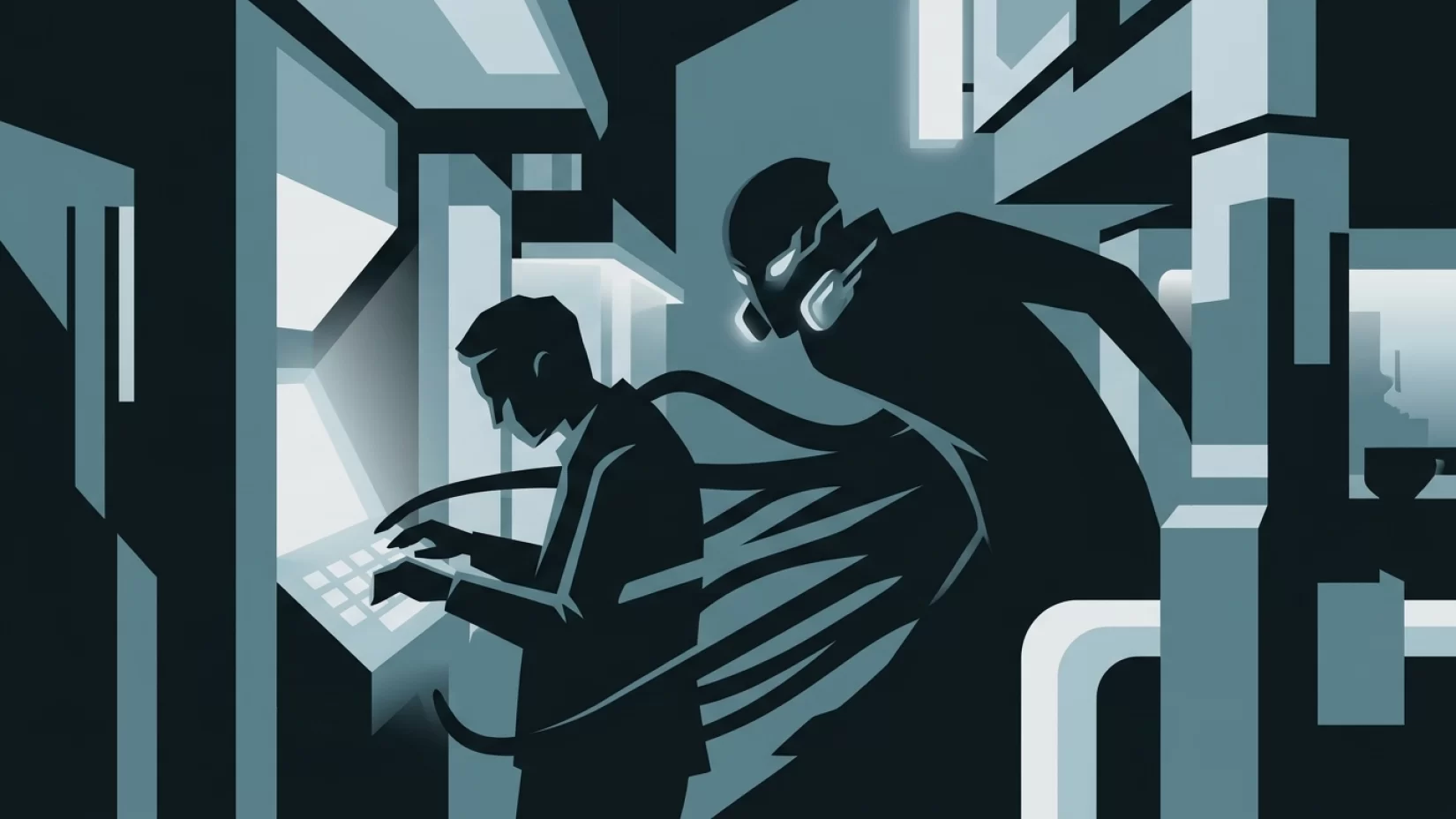
Unlike digital hacking, shoulder surfing doesn’t require sophisticated technology. All it takes is a pair of eyes (sometimes aided by a smartphone camera) and a moment of your inattention. The attacker might be a stranger sitting behind you on a train, someone in line at the checkout, or even a person pretending to be busy with their own phone. Because it feels so old-fashioned, many people underestimate how often it happens or how much damage it can cause.
Where Are You Most At Risk?
Some places are especially attractive for shoulder surfers:
- ATMs: Classic hotspots. People are often distracted, and the stakes are high—your bank account is just a few button presses away.
- Cafés and coffee shops: Free Wi-Fi and a relaxed atmosphere make these places popular for checking emails or banking. But open seating means anyone can watch your screen.
- Public transport: Trains, buses, and subways are cramped, making it easy for someone to glance at your phone or laptop over your shoulder.
- Airports: With long waits and lots of people, airports are prime locations for both distraction and observation.
- Retail stores: Entering your PIN at the checkout is a routine part of shopping, but lines and crowds make it easy for thieves to watch you type.
It’s not just about crowded places, though. Even in quieter spots, a determined observer can position themselves to see your screen or keypad. The idea that shoulder surfing only happens in packed environments is a misconception—any public or semi-public space can be risky if you’re not paying attention.
What Does Shoulder Surfing Look Like?
Most people picture an obvious snoop leaning in from behind, but real shoulder surfers are much subtler. Here’s how it often plays out:
- The casual glance: Someone nearby seems to be minding their own business, but is actually watching your fingers as you type your PIN or password.
- The phone camera trick: An attacker might discreetly record your screen or keypad from a distance, capturing your keystrokes for later use.
- The mirrored reflection: Surfaces like windows, sunglasses, or even glossy walls can reflect your screen or keypad, giving someone a clear view without being directly behind you.
- Fake distractions: Sometimes, a criminal will create a distraction (like dropping something or bumping into you) to get closer and observe your actions.
It rarely feels like a movie scene. Shoulder surfers are usually patient, blending in and waiting for the right moment. That’s what makes this threat so effective—and why so many victims never realize what happened until it’s too late.
Why Millions Never Notice: The Invisible Threat
One of the most unsettling aspects of shoulder surfing is that it often goes completely unnoticed. Unlike phishing emails (which leave a trail) or malware (which can be detected), shoulder surfing is a physical act. There’s no alert, no warning, and usually no evidence left behind. You might not realize your information was stolen until you see unauthorized charges on your bank statement or get locked out of your account.
Think about how many times you’ve entered sensitive information in public without really checking your surroundings. It’s not carelessness—it’s habit. We’re so used to using our devices everywhere that we forget how visible our actions can be. That’s exactly what shoulder surfers count on.
Common Misconceptions That Put You At Risk
Let’s clear up a few myths that can make people more vulnerable:
- "It only happens at ATMs." Not true. Any place you enter sensitive information in public is a potential risk—phone, tablet, laptop, or payment terminal.
- "Privacy screens solve the problem." Privacy screen protectors (which narrow the viewing angle of your device) are helpful, but not foolproof. Someone directly behind or beside you can still see your screen, and they don’t help at all with keypads.
- "I’d know if someone was watching me." Shoulder surfers are often subtle and patient. You might not notice a quick glance or a camera pointed your way.
- "I’m not important enough to be targeted." This isn’t about high-profile targets. Most shoulder surfing attacks are crimes of opportunity. If you have money in your account or access to valuable accounts, you’re a potential victim.
These misconceptions can lull you into a false sense of security. The reality is, anyone who enters sensitive information in public is at some risk—no matter how careful they think they are.
Real-World Consequences: More Than Just Money
Shoulder surfing can feel like a minor annoyance, but the consequences are real and often stressful. Here’s what can happen if your information is stolen:
- Unauthorized withdrawals: If someone gets your ATM PIN, they can drain your account before you notice.
- Account takeovers: Stolen passwords can allow criminals to lock you out of your own accounts—banking, email, or social media.
- Identity theft: In some cases, shoulder surfing is just the first step. Once a criminal has access to one account, they can piece together more information to commit identity fraud.
- Emotional impact: Victims often feel embarrassed, anxious, or angry. There’s the hassle of recovering lost funds, changing passwords, and regaining control, not to mention the lingering worry about what else might have been exposed.
It’s not just about financial loss. The stress and disruption caused by shoulder surfing can linger, affecting your trust in technology and even your willingness to use online services in public.
Shoulder Surfing Isn’t Just About Screens
It’s easy to focus only on digital devices, but shoulder surfing also happens with physical keypads—at ATMs, payment terminals, or even secure building entrances. Criminals watch your hand movements, memorize the sequence, or use tricks like fake mirrors or miniature cameras to capture your PIN.
Some attackers work in teams: one distracts you while the other observes. Others follow you after you enter your PIN, waiting for a chance to steal your card or device. It’s not about high-tech gadgets—it’s about exploiting moments when your guard is down.
Five Habits That Actually Reduce Your Risk
There’s no magic gadget that guarantees protection, but certain habits make a big difference. Here are five practical steps you can start using today:
- Shield your input. When entering a PIN or password, use your hand, body, or wallet to cover the keypad or screen. It might feel awkward at first, but it’s one of the simplest and most effective defenses.
- Be aware of your surroundings. Take a quick look around before entering sensitive information. If someone seems unusually close or interested, wait or move to a different spot.
- Use privacy screen protectors (but don’t rely on them alone). These filters help prevent side glances on phones and laptops, but they’re not a complete solution. Combine them with other habits.
- Position yourself smartly. When possible, stand with your back to a wall or corner, reducing the number of angles from which someone can watch you.
- Limit sensitive actions in public. If you can, avoid logging into important accounts or entering sensitive information while in crowded or unfamiliar places. Wait until you’re somewhere more private.
These habits aren’t about paranoia—they’re about making shoulder surfing more difficult, so criminals move on to easier targets. Most attackers are opportunists; if you look aware and make their job harder, they’ll usually give up.
What To Do If You Think You’ve Been Shoulder Surfed
If you suspect someone may have seen your PIN or password, don’t wait for something to go wrong. Act quickly:
- Change the compromised password or PIN as soon as possible.
- Monitor your accounts for unusual activity, especially bank transactions or login attempts.
- Contact your bank or service provider if you notice anything suspicious—they can freeze your account or help you recover access.
- Consider enabling two-factor authentication (2FA) on important accounts. This adds an extra layer of security, so even if someone has your password, they can’t log in without a second code.
Don’t blame yourself if it happens. Shoulder surfing is designed to be invisible, and even the most careful people can get caught off guard. What matters is how quickly you respond.
Beyond Personal Habits: Why Companies Should Do More
It’s frustrating that so much of the burden falls on you, the user. Some companies and banks still use outdated keypads or make you enter sensitive information in ways that are easy to observe. There’s no excuse for this. Technology is available to make transactions safer—like randomized keypad layouts, contactless payments, or better privacy barriers at ATMs and checkouts. Companies that ignore these options are putting customers at unnecessary risk.
As a consumer, you can’t always control the environment, but you can choose to support businesses that take your privacy seriously. If you notice poor security practices—like exposed keypads or lack of privacy screens—let the business know. Companies should be part of the solution, not just leave it up to you.
Final Thoughts: Confidence, Not Fear
Shoulder surfing isn’t a high-tech cyberattack, but that’s exactly why it works so well. It’s simple, quick, and hard to detect. The good news is, with a few practical habits and a little more awareness, you can make yourself a much harder target. You don’t need to be suspicious of everyone around you, but you do need to recognize that your information is valuable—and worth protecting, even in everyday situations.
Digital security isn’t just about software updates and strong passwords. Sometimes, it’s as simple as covering your hand or glancing over your shoulder. Stay aware, stay confident, and don’t let low-tech criminals take advantage of your everyday routines.