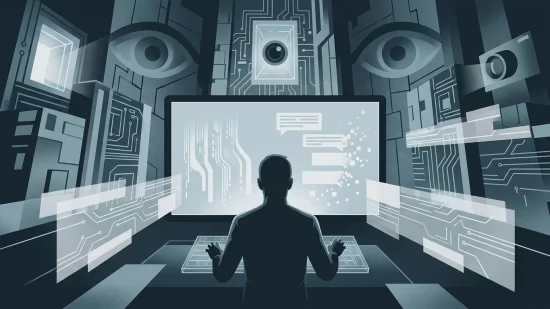
Imagine this: you’re at a friend’s birthday party. Someone snaps a group photo, uploads it to social media, and tags a few people. You’re not tagged, and you never gave permission for your face to be used. Yet, in the background, artificial intelligence quietly scans, identifies you, and adds your face to a growing library of biometric data. You didn’t upload the photo. You didn’t even know it existed. But now, a company’s AI may recognize you in future pictures — and there’s a record of your face, without your explicit consent.
This isn’t a distant, dystopian scenario. It’s happening right now, in the apps and platforms billions of us use every day. Social media’s embrace of AI-powered facial recognition is reshaping privacy in ways most people never imagined. If you care about your digital footprint, your family’s safety, or simply your right to control your own image, it’s time to pay attention.
Facial Recognition on Social Media: What’s Actually Happening?
Facial recognition AI is a technology that scans images to identify people based on their facial features — the unique structure of your eyes, nose, mouth, and more. Social media platforms, smartphone apps, and even home security devices now use these systems, often with little transparency or user control.
For years, Facebook (now Meta) was the most prominent example. Their system could automatically suggest tags for faces in photos, linking images to your profile even if you hadn’t been tagged or uploaded the photo yourself. In 2021, Meta announced it would shut down its facial recognition system, deleting over a billion facial recognition templates. That was a major step — but it didn’t end the story. Other companies, like Amazon’s Ring and numerous lesser-known platforms, have continued to develop and deploy these technologies, sometimes with even less oversight.
Here’s the crucial point: even if you never post a photo, AI can identify you in images uploaded by friends, acquaintances, or strangers. The data collected isn’t just about who’s in the photo. It’s about building a permanent, searchable record of your face — a kind of digital fingerprint — that can be used, shared, or even sold without your knowledge.
Why Should I Care? Real-World Consequences of Invisible Biometric Tracking
It’s easy to dismiss facial recognition as a tech problem that only affects celebrities or people with something to hide. But the consequences are much closer to home. Here’s why this matters for everyone, not just the privacy-obsessed:
- Loss of control: Your face is uniquely yours. Once it’s scanned, analyzed, and stored by a company, you lose control over where and how it’s used. You can change a password, but you can’t change your face.
- Misuse of data: Biometric data is valuable. Companies might use it for targeted advertising, sell it to third parties, or hand it over to law enforcement. In 2023, police in the U.S. used Clearview AI’s facial recognition database, leading to at least one wrongful arrest.
- Security risks: If hackers breach a company’s database, your facial data could be exposed. Unlike a stolen credit card, you can’t get a new face.
- Unwanted surveillance: Home security devices, like Amazon’s Ring, have been accused of collecting and storing facial data without consent. In 2026, a class-action lawsuit was filed against Ring for its ‘Familiar Faces’ feature, which identified visitors’ faces without asking for their permission.
- Human impact: The stress, confusion, and loss of trust that follow a privacy violation are real. If you’ve ever felt uneasy about an app knowing too much about you, imagine that feeling multiplied by the permanence of biometric data.
Who’s Being Affected — and Why Most People Never Notice
Billions of users worldwide are caught in this web. You don’t have to be an influencer or tech enthusiast. If you use social media, own a smartphone, or appear in someone else’s photos, you’re likely affected. The reach of facial recognition extends to children, elderly relatives, and anyone who appears in group photos — even those who don’t have their own accounts.
Most people never realize their biometric data is being collected. Why? Because the process is invisible. There’s no obvious alert or warning. The data is gathered quietly in the background, often buried in lengthy privacy policies few people read. Even when companies offer the option to opt out, the controls are often hard to find or poorly explained.
Common Misconceptions: What People Get Wrong About AI Face Recognition
- "I turned off face recognition on Facebook, so I’m safe." Disabling features on one platform doesn’t protect you elsewhere. Other apps, devices, or even friends’ uploads can still collect your data.
- "Facial recognition is only used for security." While companies promote these features for convenience or safety, the data often serves other purposes, like advertising, analytics, or even being shared with third parties.
- "If I’m not tagged, I’m not identified." AI doesn’t need a tag to know who you are. It can match your face to existing images or profiles, even if you’re just in the background.
- "Only tech giants use this technology." Many smaller companies, app developers, and device makers use or buy access to facial recognition tools. Some have far less oversight or security than the big names.
What’s at Stake: Biometric Data Is Not Just Another Password
Biometric data — like your face or fingerprints — is fundamentally different from other types of personal information. It’s permanent. If a password leaks, you can change it. If your email is compromised, you can make a new one. But your face? That’s for life.
Stolen or misused biometric data can lead to a range of problems, from identity theft to being wrongly flagged by automated systems. In some cases, people have faced wrongful arrests or been denied services because an algorithm made a mistake. The stress and confusion these errors cause can be overwhelming, especially when there’s no clear way to correct them.
There’s also the risk of future misuse. You might not care if a company has your face today, but what about in five or ten years? As AI improves, old data can be used in new, unexpected ways — including for things you never agreed to.
Recent Legal Battles and Company Backpedals: Are Things Getting Better?
Public pressure and lawsuits have forced some companies to rethink their use of facial recognition. In 2021, Meta deleted over a billion facial recognition templates and said it would stop using the technology on Facebook. In 2023, the U.S. Federal Trade Commission (FTC) banned Rite Aid from using AI-powered facial recognition for five years after reckless deployment. Amazon’s Ring is now facing a class-action lawsuit for collecting facial biometric data without consent.
These moves show that change is possible. But they’re not enough. Many companies still use facial recognition, and there’s no comprehensive law in most countries to protect your biometric data. Even where rules exist, enforcement is often weak, and companies find ways to skirt the edges.
So while some progress has been made, the underlying risks remain. The technology is still being developed and deployed, often faster than regulators can keep up.
Everyday Scenarios: How This Affects You and Your Family
- Family photos on social media: You post a group shot from a reunion. Even if you don’t tag anyone, AI might scan and identify everyone in the picture, adding their faces to a database.
- Friends’ uploads: Someone else posts a photo with you in it. You have no control over their privacy settings, and you might never know your face was scanned.
- Home security cameras: Devices like Ring can identify and store the faces of everyone who visits your home — delivery drivers, friends, neighbors — often without their knowledge or consent.
- School or event photos: Kids’ images can be scanned and identified, creating biometric records before they’re old enough to understand the risks or give informed consent.
Five Steps That Actually Reduce Your Risk
There’s no magic button to erase your face from every database, but you can take practical steps to limit exposure and regain some control:
- Review and adjust your privacy settings. On platforms like Facebook, Instagram, and others, dig into the privacy menus. Disable face recognition features if available. On Facebook, for example, you can turn off face recognition in the settings under "Face Recognition." Don’t assume this is set to off by default.
- Talk to friends and family about privacy. Ask them not to tag you in photos or upload images of you without your permission. It’s an awkward conversation, but it helps set boundaries.
- Limit what you share online. The fewer photos of your face online, the less data AI has to work with. Be mindful about what you post — and what others might post on your behalf.
- Choose privacy-respecting devices and apps. Some companies, especially smaller or privacy-focused ones, avoid facial recognition altogether. Look for devices and platforms with clear, strict privacy policies.
- Stay informed and advocate for better laws. Support organizations and lawmakers pushing for stronger biometric privacy protections. The more people demand transparency and accountability, the more likely companies are to change.
What About Your Rights? Navigating a Patchwork of Laws
Your rights over your biometric data depend heavily on where you live. In some places, like Illinois in the United States, strict laws require companies to get consent before collecting facial data. In most countries, though, protections are weak or non-existent. Even where rules exist, enforcement is inconsistent.
Here’s what you can do:
- Read privacy policies (as tedious as it is). Look for sections about biometric data or facial recognition.
- Exercise your rights where possible. Some platforms let you request deletion of your data or opt out of biometric data collection.
- File complaints with regulators if you believe your rights have been violated. It may not solve the problem overnight, but it adds pressure for change.
Looking Forward: The Need for Skepticism and Action
AI-powered facial recognition is not just a feature — it’s a fundamental shift in how our identities are tracked, stored, and commodified online. Companies love to tout convenience and security, but too often, they gloss over the risks and sidestep responsibility for what happens when things go wrong.
As a consumer, you don’t have to accept this as the new normal. Be skeptical of platforms that collect more data than necessary. Question vague claims about security and convenience. Demand clear answers about what’s being collected, how it’s used, and who has access. And above all, take steps to protect yourself and your loved ones — because if you don’t, no one else will.
Facial recognition on social media is already affecting billions, often without their awareness or consent. The consequences can be lasting and deeply personal. You deserve to know what’s happening, make informed choices, and push back against technology that puts your privacy at risk.
Risk Level: High. While not every user will experience direct harm, the scale, permanence, and invisibility of biometric data collection — combined with insufficient regulation — make this a high-risk issue for anyone who values privacy and control over their own identity.