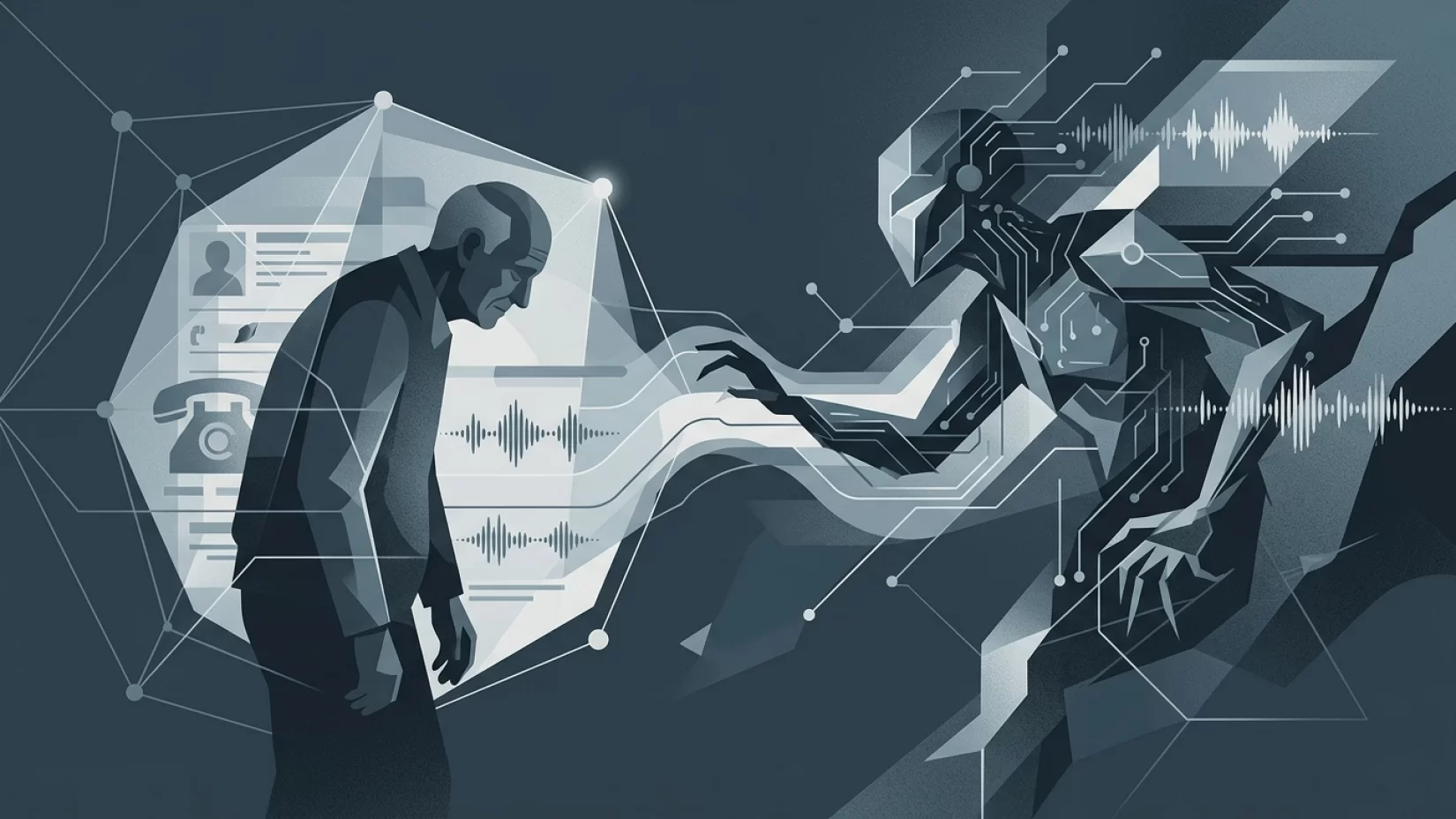
Imagine picking up the phone and hearing the panicked voice of your daughter, grandson, or best friend. They’re in trouble — maybe there’s been an accident, or they need money urgently. The voice is unmistakable, trembling with fear, pleading for help. Would you hesitate? Most people wouldn’t. Now, imagine finding out later that the call wasn’t real — the voice wasn’t your loved one at all, but a scammer using artificial intelligence (AI) to clone their voice. For thousands of elderly people and their families, this scenario is no longer science fiction. It’s a growing, deeply personal threat that’s already cost billions and shattered trust in even the most familiar calls.
AI is making scams targeting seniors more convincing and more dangerous than ever before. By combining leaked personal data with eerily accurate voice cloning, scammers can create the perfect storm: a message that sounds exactly like someone you trust, backed up with private details that only a real family member would know. This isn’t just a technical problem — it’s a human one, with real-world consequences that ripple through families and communities. Let’s break down how these scams work, why they’re so effective, and — most importantly — what you can do to protect yourself and your loved ones.
Why AI Scams Against Seniors Are Surging
In 2023, Americans over 60 reported losses of more than $3.4 billion to scams, an 11% jump from the previous year. That’s not just a statistic — it’s a tidal wave of heartbreak, lost savings, and shaken confidence. The FBI’s Elder Fraud Report shows that over 101,000 older adults were affected, and those are just the cases we know about. Many more go unreported out of embarrassment or confusion.
The explosion in losses isn’t random. Scammers have new weapons: AI voice cloning tools that can mimic anyone’s voice with startling accuracy, and a treasure trove of leaked personal data from years of data breaches. It’s a dangerous combination. Seniors, who may be less familiar with the latest digital threats and more likely to trust a familiar voice, are prime targets.
How AI Voice Cloning Works — And Why It’s So Convincing
AI voice cloning uses artificial intelligence to analyze short audio samples — sometimes just a few seconds from a voicemail, social media clip, or even a YouTube video. The software then generates a digital copy of that person’s voice, able to say anything the scammer types in. The result is a synthetic voice that can sound almost identical to the real person, complete with their accent, tone, and quirks.
This technology isn’t just theoretical. In 2023, a journalist from Vice used AI voice cloning to trick a major bank’s voice authentication system, proving that even systems designed to recognize your voice can be fooled. Scammers don’t need sophisticated skills or expensive equipment, either. Many voice cloning tools are cheap or even free online, making them accessible to anyone with bad intentions.
Leaked Data: The Secret Ingredient That Makes Scams Personal
Voice alone might not be enough to convince someone. That’s where leaked personal data comes in. Over the past decade, countless data breaches have exposed names, addresses, family relationships, and even private messages. Scammers scoop up this information from the dark web or shady online forums and use it to craft their stories.
For example, a scammer might know your grandson’s name, his recent trip to Florida, or the fact that you just celebrated a birthday. When the cloned voice mentions these details — “Grandma, it’s me, Jacob. I lost my wallet after my flight to Miami!” — it feels real. These aren’t generic scams; they’re tailored to you, using your own life as the script.
What Happens When Scammers Strike: A Realistic Scenario
Let’s walk through how one of these scams might unfold for a typical family:
- Step 1: The scammer finds a short audio clip of your loved one online (maybe from a Facebook video or a voicemail greeting) and uses AI to clone their voice.
- Step 2: They gather personal details about your family from leaked databases or public social media posts.
- Step 3: You receive a call. The voice sounds exactly like your son or daughter, and they know things only your family would know. They claim to be in trouble and need money wired immediately.
- Step 4: You feel a surge of panic and urgency. The caller begs you not to tell anyone else. You rush to send money, or share sensitive information, before thinking it through.
- Step 5: Hours later, you realize something’s wrong. The real family member calls, safe and sound. The money is gone, and the scammer has vanished.
This isn’t just about lost cash. Victims often feel embarrassed, anxious, and even ashamed — emotions that can linger long after the scam is over.
Why Millions of Victims Never Realize Their Data Was Used
One of the most unsettling parts of these scams is how invisible they are. Most people don’t realize just how much of their personal information is floating around online. Data breaches at banks, hospitals, social media platforms, and even loyalty programs have exposed billions of records. Once leaked, this information is nearly impossible to claw back.
Scammers don’t need to hack your phone or computer directly. They simply piece together details from multiple sources, creating a convincing profile of you and your family. By the time the scam happens, it feels like the caller knows everything — because, in a way, they do.
Common Misconceptions That Leave People Vulnerable
- "AI voice scams are rare — it won’t happen to me." Unfortunately, these scams are becoming more common, especially as the technology gets cheaper and easier to use. The FBI and consumer protection agencies are seeing a steady rise in cases.
- "Only older adults are targeted." While seniors are at the highest risk (and suffer the biggest financial losses), anyone can be targeted. Scammers will go after whoever seems most likely to respond.
- "Voice authentication is foolproof." Banks and tech platforms love to tout voice recognition as a security feature. But as demonstrated by journalists and security researchers, AI can fool these systems surprisingly easily. Relying on voice alone is no longer enough.
Warning Signs: How to Spot an AI-Powered Scam Call
Even the most convincing scam calls often have subtle red flags. Here are some signs to watch for:
- Urgency and secrecy: The caller insists you act immediately and not tell anyone else. Real emergencies rarely demand secrecy.
- Requests for money or sensitive information: They ask for wire transfers, gift cards, or banking details. Be wary of any unexpected financial requests, no matter how convincing the voice.
- Unusual phone numbers: The call comes from an unfamiliar or blocked number. Scammers often spoof numbers to hide their identity.
- Strange phrasing or awkward pauses: While AI voices are getting better, they sometimes sound slightly off — with odd intonations or delays.
- Stories that don’t quite add up: If something feels odd or inconsistent, trust your instincts and double-check.
Five Steps That Actually Reduce Your Risk
While no solution is perfect, there are practical steps you and your family can take to make these scams less likely to succeed:
- Set up a family code word or phrase. Choose something unique and memorable. If a loved one ever calls in distress, ask for the code word. Scammers won’t know it, no matter how convincing the voice.
- Pause before acting on urgent requests. If you get a call asking for money or sensitive info, hang up and call the person back on their known number. Don’t rely on caller ID alone — it can be faked.
- Limit personal information online. Review your (and your family’s) social media privacy settings. Remove public details about birthdays, trips, or relationships that could be used in a scam.
- Educate your family, especially seniors. Talk openly about these scams. Share examples and practice what to do if someone receives a suspicious call.
- Monitor financial accounts and credit reports regularly. Set up alerts for unusual activity, and check statements for unauthorized transactions. The sooner you spot fraud, the better your chances of minimizing the damage.
Can Technology Help Detect AI Voice Scams?
Some companies are working on tools to spot AI-generated voices, but the technology is still in its early stages. Voice authentication systems, once seen as a security upgrade, are now vulnerable to these attacks. Banks and tech companies need to do more — and frankly, many are moving too slowly. Relying on technology alone isn’t enough right now. Personal vigilance and family communication are your best defenses.
The Human Toll: Beyond the Money
The financial losses are staggering, but the emotional impact can be just as severe. Many victims report feeling isolated, embarrassed, or even angry at themselves for being tricked. This isn’t fair. The reality is that these scams are designed to exploit trust, love, and the natural instinct to help family. No one should feel ashamed for falling victim — but everyone can learn to be a little more cautious.
For families, these incidents can create tension and mistrust. Some older adults may become suspicious of legitimate calls, or withdraw from digital communication altogether. The ripple effects can last long after the money is gone.
What Needs to Change: Holding Companies Accountable
Tech companies love to advertise the benefits of AI, but too many ignore the risks. Voice cloning tools are often released with little oversight or security in mind. Social media platforms and banks haven’t done enough to protect users from data leaks or to warn about these new threats. Regulators are starting to pay attention, but progress is slow.
Until companies and lawmakers get serious about protecting consumers, the burden falls on families to stay informed and vigilant. That’s not fair — but it’s the reality for now. Demand better from the services you use. Ask your bank what steps they’re taking to prevent AI voice fraud. Push social media platforms to improve privacy controls and crack down on data leaks.
Building Digital Confidence, Not Fear
AI voice cloning scams are a real and growing threat, especially for elderly family members. But with knowledge and a few practical steps, you can protect yourself and your loved ones. Talk about these risks openly. Set up a family code word. Be skeptical of urgent, unexpected calls — even when the voice sounds right. And remember: the safest families are the ones who look out for each other, online and off.
Stay informed, stay connected, and don’t let scammers steal your trust. You have more power than you think — and together, we can make it much harder for AI to break into our lives.